Ground Covers for smarter, greener and more sustainable solutions
June 2026
As temperatures rise and water conservation becomes increasingly important, ground covers provide a smarter, greener, and more sustainable solution for modern outdoor living.
Unlike conventional lawns, ground cover plants require far less water, mowing, fertiliser, and maintenance once established. Many varieties thrive in full sun or part shade and are perfectly suited to Perth's Mediterranean climate and sandy soils. Their dense growth naturally suppresses weeds, helping reduce the need for herbicides while keeping gardens healthy and attractive year-round.
Ground covers also soften outdoor spaces that would otherwise be dominated by concrete, paving, or bare ground. Replacing unnecessary hard surfaces with living plants can help cool surrounding areas, improve soil health, absorb rainfall, and reduce heat build-up around homes and buildings.
In addition to their environmental benefits, many ground cover plants produce colourful flowers that attract bees, butterflies, and other beneficial pollinators, creating vibrant and biodiverse gardens. Their versatility also makes them ideal for pots, hanging baskets, pathways, retaining walls, verges, and lawn replacement areas.
As Perth continues adapting to a changing climate, ground cover plants are proving to be a perfect solution to, low maintenance, cost effective, bringing beauty to your garden, with low water requirements and environmentally responsible alternative that enhances both residential and commercial spaces.
Choosing ground cover plants is more than a landscaping trend - it is an investment in cooler, greener, and more sustainable communities for the future.
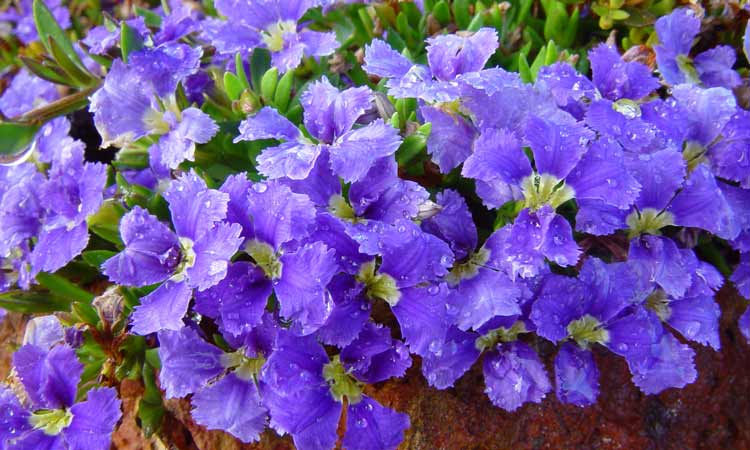
Dampiera diversifolia
Dampiera diversifolia is a low-growing Australian native ground cover prized for its vivid blue flowers and strong adaptability to dry, sandy conditions. This plant forms a spreading, compact shrub that typically reaches around 20-50 cm in height and can spread up to 1 metre or more, depending on conditions.
Appearance
One of its most distinctive features is its bright blue to violet fan-shaped flowers, which appear mainly in spring and early summer. The foliage is small, green, and slightly soft in texture, forming a neat ground-hugging mound.
This plant thrives in:
- Full sun to light shade
- Well-drained sandy or gravel soils
- Low-water or drought-prone gardens once established
It is naturally adapted to harsh Australian conditions, including heat, poor soils, and seasonal dryness.
Landscaping uses:
- Produces striking blue flowers that enhance garden colour
- Requires very little water once established
- Helps suppress weeds by forming dense coverage
- Attracts native bees and pollinators
- Suits rockeries, borders, pathways and naturalistic garden designs
Goodenia varia
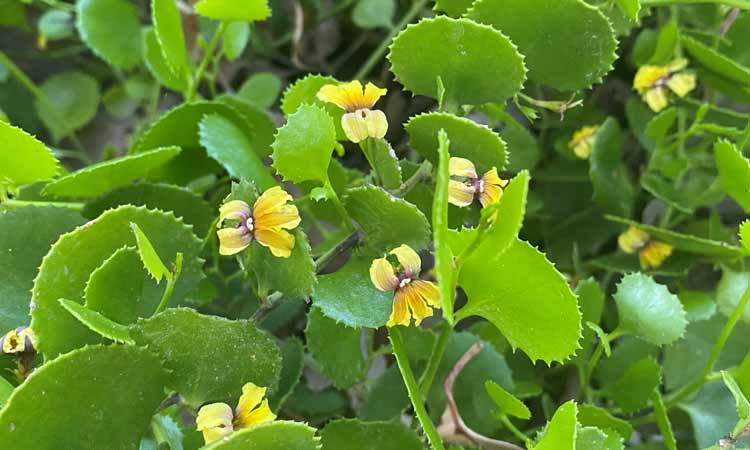
Goodenia varia is a small, hardy Australian native ground cover shrub that is well adapted to dry, sandy, and low-nutrient soils-making it a strong performer in Western Australian gardens, including Perth.
Appearance
This plant typically grows 10-30 cm high and spreads outward to form a soft, leafy mat. It has:
- Small, slightly toothed green leaves
- Bright yellow, fan-shaped flowers
- A naturally spreading, ground-hugging habit
The flowers often appear in spring and can continue into summer depending on conditions.
Growing conditions
Goodenia varia thrives in:
- Full sun to light shade
- Well-drained sandy or gravel soils
- Dry or low-water gardens once established
Landscaping uses:
- Produces cheerful yellow flowers that attract native bees
- Forms a dense cover that helps suppress weeds
- Requires very little water once established
- Performs well in native and coastal gardens
- Helps stabilise soil in open or sandy areas
- Low-maintenance verge and roadside planting
Dymondia margaretae
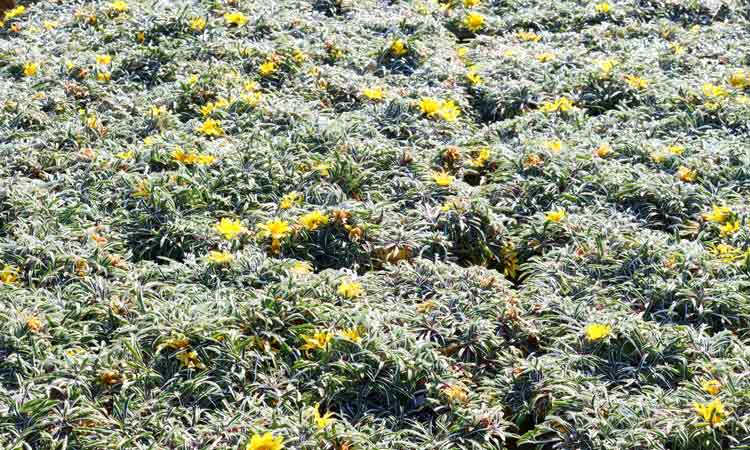
Dymondia margaretae, commonly known as silver carpet, is a very low-growing, mat-forming ground cover prized for its tight growth habit, drought tolerance, and ability to create a "living paving" effect in landscapes.
Appearance
This plant forms a dense, flat carpet typically 2-5 cm high. It has:
- Narrow, grey-green leaves with a silvery underside
- A tight, spreading growth habit that fills gaps between pavers
- Small yellow daisy-like flowers that appear intermittently in warmer months
The foliage often curls slightly at the edges during dry periods, giving it a textured, dynamic look.
Growing conditions
Dymondia margaretae performs best in:
- Full sun to light shade
- Well-drained sandy or gravelly soils
- Low-water or drought-tolerant gardens
Landscaping uses:
- Forms a dense, weed-suppressing ground mat
- Works as a lawn alternative in low-traffic areas
- Tolerates heat, coastal winds, and poor soils
- Requires very little maintenance
- Creates a clean, modern "carpet" effect in gardens
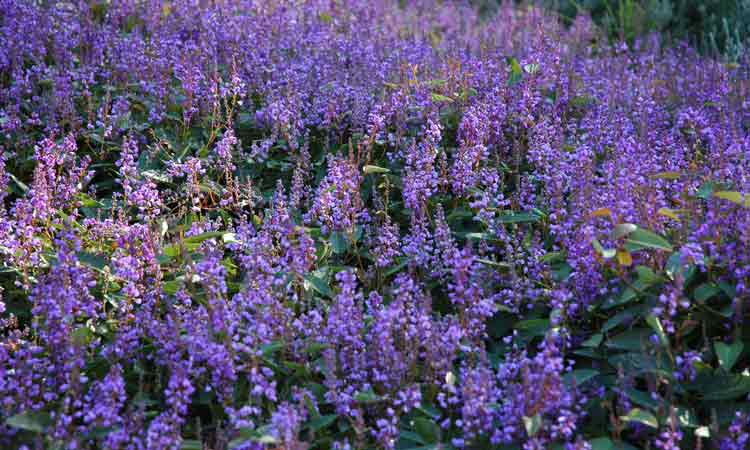
Hardenbergia 'Sea of Purple'
Hardenbergia violacea 'Sea of Purple' is a popular native Australian ground cover and climbing plant form of the species Hardenbergia violacea, widely admired for its massed purple flower displays and strong performance in low-maintenance gardens. Depending on how it is trained, it can be used as a climbing vine or a sprawling ground cover.
Appearance
This plant is best known for its spectacular displays of:
- Deep purple pea-like flowers
- Evergreen, leathery green foliage
- Dense flowering coverage that can create a "carpet of purple" effect
Flowering typically occurs from late winter through spring, often covering the plant in massed blooms.
Growing conditions
Hardenbergia violacea 'Sea of Purple' thrives in:
- Full sun to part shade
- Well-drained soils, including sandy or clay-based soils
- Low-water gardens once established
Landscaping uses:
- Produces dramatic seasonal colour
- Requires little water once established
- Mass ground cover planting on slopes and banks
- Climbing over fences, trellises, and pergolas
- Native garden designs and revegetation projects
- Erosion control in large open spaces